introduction: under the requirements of globalization and business continuity, it has become a common disaster recovery and availability strategy to adopt hybrid deployment and make the german computer room and the indian computer room backup each other. this article takes the cost-benefit analysis of hybrid deployment practices of german computer rooms and indian computer rooms as mutual backups as the core, systematically evaluates key driving factors, and helps decision-makers strike a balance between compliance, performance, and cost.
background and goals
the choice to back up the german computer room and the indian computer room is usually based on geographical redundancy, regulatory isolation and business continuity objectives. this strategy is designed to reduce the risk of single points of failure while enabling cross-region recovery. this article aims to analyze direct and indirect costs, risk reduction and business value from a cost-benefit perspective to help clarify whether it is suitable for the company's long-term operating strategy.
hybrid deployment architecture overview
hybrid deployments usually combine local private cloud and public cloud resources, and the german and indian computer rooms may have different responsibilities: one side is the main production environment, and the other side carries read or disaster recovery loads. the architecture needs to consider data replication methods, off-site load switching and network topology to ensure that services can be quickly restored at a controllable cost when a failure occurs.
german computer room roles and characteristics
german computer rooms are often used in production environments for european customers, and their advantages include localized compliance advantages and lower legal risks. it has advantages in data sovereignty, privacy protection and lower latency access to european users. cost and operational requirements are affected by factors such as european laws and energy consumption, and compliance and energy efficiency need to be fully considered during design.
role and characteristics of indian computer room
indian computer rooms are usually used as auxiliary sites or disaster recovery centers. they have advantages in talent costs and operation and maintenance scale, and provide lower-cost computing resources in some scenarios. indian computer rooms can undertake non-critical or off-site backup tasks, but cross-border data transmission and latency need to be evaluated to meet consistency and recovery time objectives.
cost composition analysis
cost components include infrastructure costs, network bandwidth costs, data replication and storage costs, operation and maintenance and personnel costs, and compliance and audit costs. when analyzing, you should distinguish between one-time investment and ongoing operating expenses, evaluate the impact of bandwidth and encryption requirements brought about by cross-border transmission on the total cost, and reasonably predict long-term tco.
latency, regulations and compliance considerations
transferring data across germany and india creates delays and potential compliance challenges. whether there are data sovereignty, gdpr, or local regulatory restrictions must be assessed and a data tiering strategy designed accordingly. latency affects real-time synchronization and user experience, and there is often a trade-off between consistency level and cost.
disaster recovery and data consistency strategy
to achieve mutual backup, you need to clearly define the rto and rpo goals and choose a synchronous or asynchronous replication strategy. synchronous replication ensures consistency but increases latency and cost, while asynchronous replication reduces latency but risks data loss. based on business priorities, hierarchical backup strategies and drill plans should be set to reduce recovery risks in the event of actual failures.
long-term evaluation of operations and maintenance costs
long-term operating costs include personnel training, monitoring, patching and drill costs. cross-border team collaboration will also bring efficiency losses related to communication and time zones. through automation and standardized operation and maintenance processes, human errors can be reduced and labor costs optimized, while ensuring that the backup strategy remains controllable and efficient in the long-term evolution.
cost-benefit trade-offs and decision-making recommendations
when evaluating the cost-effectiveness of hybrid deployment practices such as mutual backup of german computer rooms and indian computer rooms, the business losses of disaster reduction, compliance risk avoidance benefits and long-term operation and maintenance costs should be quantified. it is recommended to carry out step-by-step verification, starting with key services as a pilot, and using measurable indicators to evaluate the recovery effect, performance and overall cost.
conclusion and recommendations
conclusion: mutual backup between german computer rooms and indian computer rooms has obvious value in improving availability and compliance coverage, but a balance needs to be struck between delay, compliance, and long-term operation and maintenance costs. it is recommended to conduct a risk and cost model assessment first, formulate a hierarchical backup strategy, and reduce operation and maintenance costs and recovery time through automation and continuous drills to ensure that hybrid deployment practices meet expectations in terms of cost-effectiveness.

- Latest articles
- A Practical Guide Teaches You Common Testing Methods To Verify Whether Hong Kong Server Clusters Are Exclusive
- Contract Considerations: Caution Is Needed When Choosing Ranked Vendors For US Server Rentals
- Best Practices For SMEs Using Cambodia CN2 Return-to-China Servers To Reduce Latency Costs
- Common Troubleshooting Steps And Rapid Recovery Solutions For Taiwan Telecom CN2 Broadband
- An Automated Operations And Maintenance Solution Covering Everything From Development To Monitoring How To Build A Site On Hong Kong Cloud Servers
- From A Business Perspective, Is Vietnam's VPS Reliable? Considerations Regarding Compliance And Data Security
- Free Server Korea Security Protection Policy And Backup Implementation Guide
- Cost And Operation Management Recommendations For Enterprises Deploying Korean CN2 Site Cluster Cloud Servers
- Basic Information On Taiwan Proxy Servers, Common Terminology Explanations, And Purchase Precautions
- How To Choose A Cloud Server In Thailand: From Network Latency To After-sales Service, Comprehensive Aspects
- Popular tags
-

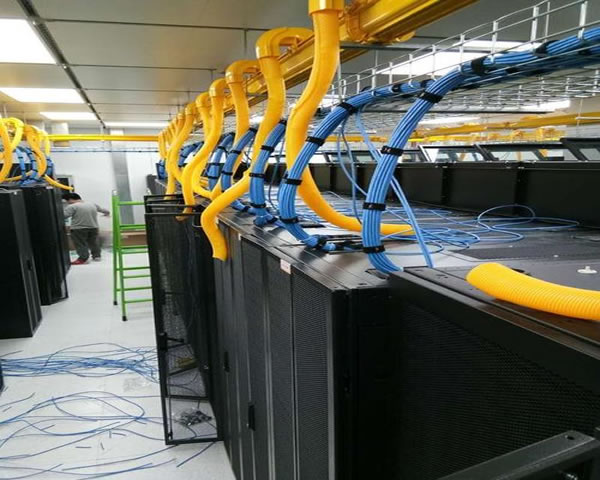
Summary Of Best Practices In Cabinet Layout And Cable Management From German Computer Room Technology
it summarizes the best practices of german computer room technology in cabinet layout and cable management, covering layout principles, cable routing, airflow management, power supply and monitoring, and is suitable for data center design and operation and maintenance optimization. -
Evaluation Of Download Speed And Stability Of German Volkswagen Server
evaluate the download speed and stability of the german volkswagen server and analyze its performance in various application scenarios. -
Analysis Of The Reasons And Impact Behind The Permanent Shutdown Of Volkswagen's German Servers
analyze the reasons behind the permanent shutdown of volkswagen's german servers and its impact on the industry, including discussions on technology, security and market aspects.